A Range Rover bought from a dealer: smoke smell in the front (only when parked up), dog hairs and dog smell in the rear. The dealer had already valeted it and was contributing to the cost. Gary explains the tiered upgrade approach, why odour sticks to glass, and why the owner might smell something others can't: the licorice allsorts effect.
A Range Rover bought from a dealer. The dealer had given it a thorough valet before sale and was contributing to the cost of further treatment. Two separate smells: smoke in the front, only noticeable when the car has been parked up and the customer comes back to it; dog in the rear, with dog hairs still visible in the carpet. Neither smell was imaginary: the dealer's valet had cleaned the surface without reaching the source.
The Treatment
We went for a mid-range OdourKill option: not the most comprehensive service, but enough to deal with what was described. The customer was not far away, so if the first treatment was not sufficient, he could bring it back and just pay the difference to upgrade to the next level. That is the key advantage of the tiered approach: you do not have to pay for the top treatment upfront when something lower might do the job.
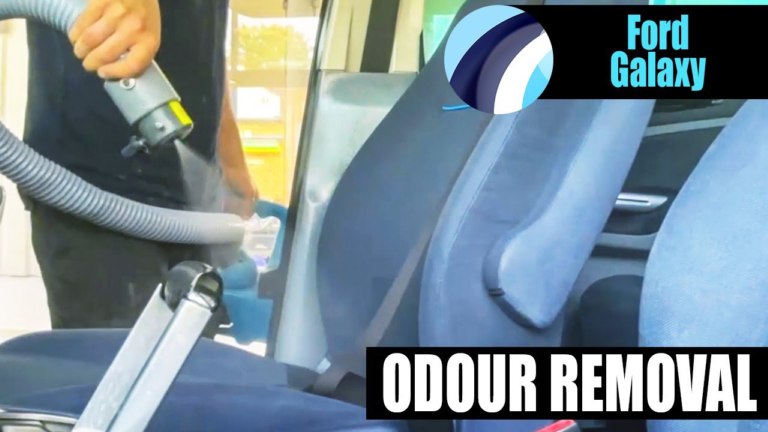
The machine wet-fogs the interior with a liquid deodorant. It looks wetter than it is: the product is designed to cover all surfaces, force its way into gaps, penetrate the fibres of seats and carpets, and neutralise the contaminants causing the smell. Electrical components are covered first. The dashboard and other hard surfaces have to be done by hand. Seatbelts are pulled out to their full extension: the smell gets in there too. On this car the customer chose to have it done twice.
James cleaned the glass at the end. Most people do not know this, but odour sticks to glass: particularly smoke. It is one of the places treatment gets overlooked, and it is part of every service we do.
The Unknown Source Problem
When you buy a car second-hand, you do not always know the full history of what has happened inside it. The smoke and the dog are the obvious smells. But there could be an underlying source that only becomes apparent once the surface contamination is dealt with: a child seat spillage, something that rolled under a seat, a takeaway that went over at some point. Until the main smells are gone, anything buried underneath is masked. The treatment handles the known sources; the unknown ones reveal themselves afterwards, if they exist at all.
Why the Owner Can Smell It When Others Cannot
Some people become attuned to a specific smell. Gary's analogy: if you have eaten liquorice allsorts as a child, you can detect that smell at a much lower concentration than someone who has never encountered it. The same applies to the smell of smoke in a car you bought. You know what you are looking for, which means you can detect traces that others would miss entirely. This is not paranoia: it is just familiarity. It is why the real-world test matters: a week or two of normal use, with the car parked in the right conditions, will tell you more than an immediate sniff on the day.
If It Comes Back
If the treatment is not fully effective, there are two approaches. The first is to track the residual smell to its source (ash behind a plastic panel, dog hair in a seat runner) and deal with it directly. The second is pairing: certain fragrances neutralise specific odours by sharing the same olfactory notes. Kentucky Bluegrass pairs with petrol and diesel, for example. For a car with both smoke and dog smells, pairing is more complicated, but it is an option once the main source is dealt with.


Share this video