Lifting Carpets

Quick answer: Lifting carpets means physically raising or removing the car's carpets and underlay so you can see and access the floorpan underneath - it is essential on leak and flood jobs because water and damage are often hidden below even when the surface feels dry.
Lifting the carpets refers to lifting them up, to access underneath or to let them drip-dry, but leaving them in the car.
You may often hear us talking about 'lifting carpets' because there are often large amounts of water underneath them. Stopping leaks is only a part of the problem with leaky cars, as the water needs to be removed and the car dried to prevent all the problems associated with leaks in cars.
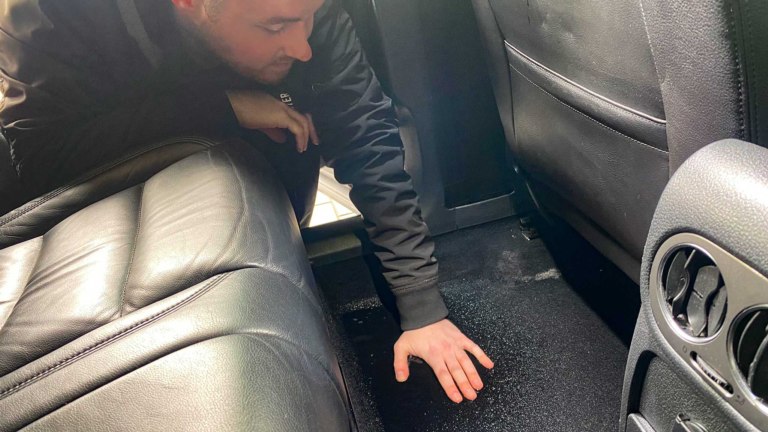
Therefore, it is essential to lift the carpets.
Initially, we may use a moisture tester to see if we think there is any water under the carpets, although sometimes it may be obvious because the carpets are wet.
In order to get to the water underneath the carpet and remove it using an extractor, we will need to remove the seats and usually the trim along the bottoms of the doors.
Ideally, we, we would remove the entire carpet from the car, however, in order to do this we would need to strip much of the interior, including the centre console and possibly the dashboard. This would be extremely time-consuming and expensive.
The alternative is to lift the carpets and dry them while still in the car. The body of the car does need to be dried anyway, so it is a suitable compromise to do both at the same time.
The majority of cars have thick sponge underneath the carpets. This serves as sound deadening and also creates enough space to hide ridged box sections, wiring loom, speakers and electrical controllers. Unfortunately, this sponge is extremely effective at holding water and very difficult to dry quickly.
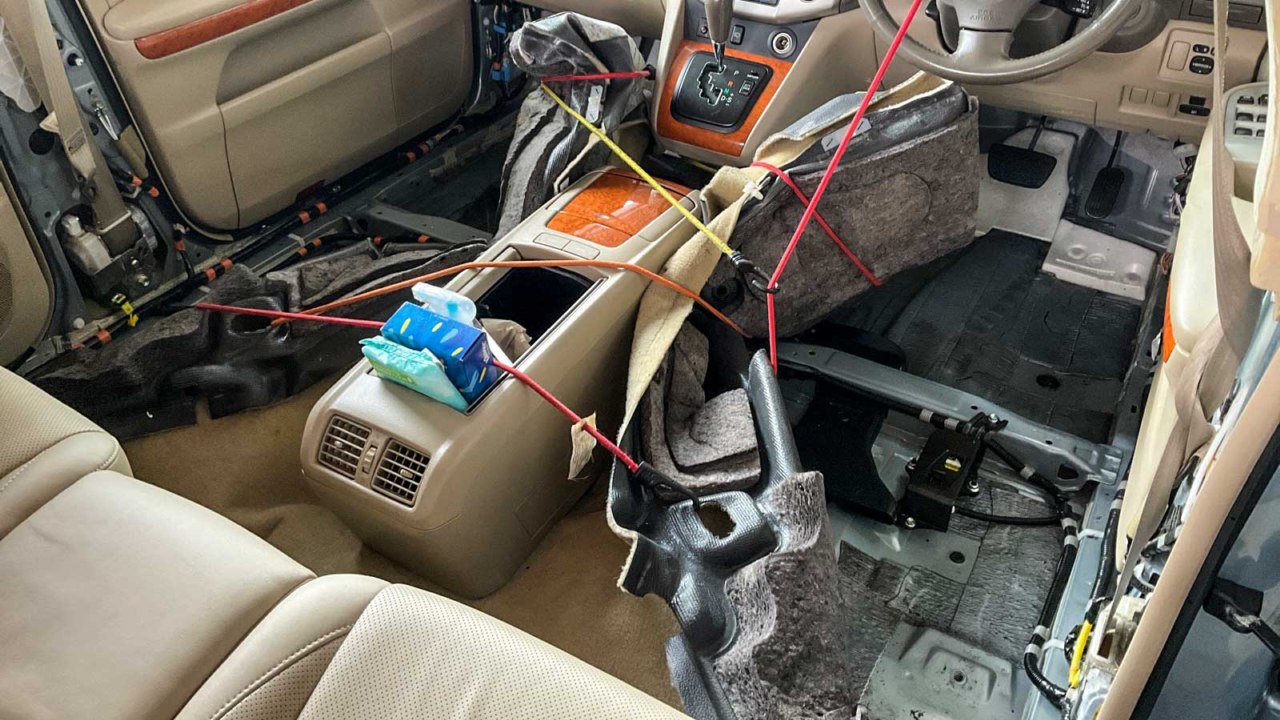
We will use bungees, clips and props to lift up the carpet. We can then use an extractor to suck the water out of the floor pans. The carpets will then drip-dry which will remove most of the water, and we will return every few hours to suck out water which has pooled underneath. All the while, we use heated industrial air movers and dehumidifiers to help the interior dry. On some cars, this can take 2-3 days.
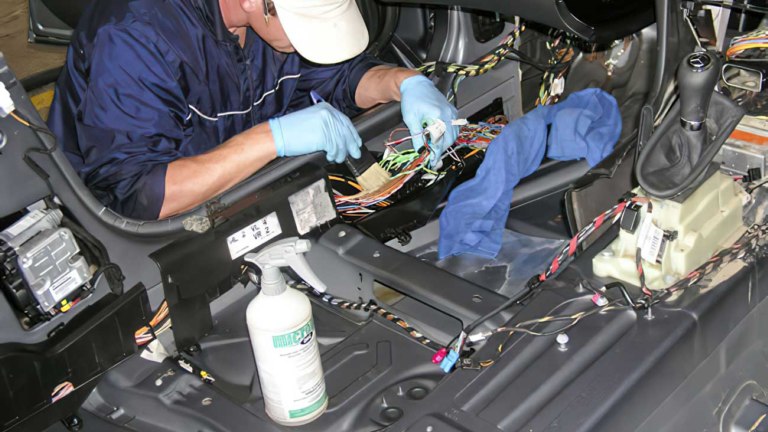
If we took the carpets out of the cars, and we sometimes do, they still need to drip-dry as they are moulded, shaped and often contain polystyrene blocks, so we couldn't run them through a mangle.
There are times where we will fully strip a car's interior and remove the carpets, but this is usually done in cases of severe contamination due to flooding.
What it means
Lifting carpets means going beyond a surface feel test and physically raising or removing the carpets and underlay to see what is happening underneath. In most modern cars the visible carpet is bonded to or laid over thick foam and soundproofing, which can hold a huge amount of water without feeling obviously wet on top. Lifting the carpets lets a technician see the metal floorpan, wiring, seat mounts and soundproofing and check how far water and contamination have spread.
Why it matters
Carpet that feels dry proves nothing. Underneath it there can be soaked underlay, rust forming on seat mounts and standing water in the floor depressions, and none of that announces itself through the pile. Lifting is the only way to find it.
Drying depends on the same access. Thick foam and soundproofing cannot be dried properly with everything clamped down, so air movement, extraction and dehumidifiers all need the carpet up to reach the material that is actually holding the water. There is wiring under there as well: looms, connectors and sometimes control units sit beneath the carpet, and lifting it lets corrosion be found and dealt with before intermittent electrical faults start.
It settles the scope of the job, too. A quick valet can make the top surface look fine while the real question is whether this is simple drying or full decontamination and replacement of soaked material.
When carpets come up
You will see lifting carpets mentioned in leak reports, decontamination estimates and inspection notes. Typical comments include carpets not yet lifted, scope unknown, lift carpets and underlay to inspect for water damage, carpets lifted, underlay saturated or carpets lifted, wiring and floorpan checked. It is often used to explain why a proper leak and water damage assessment cannot be done in a five minute look round the car park.
Context
Lifting carpets sits in the middle of a correct leak and water damage process. First the source of water is found and stopped, then carpets and trims are lifted or removed so the technician can see the full extent of the damage. Water in the door cavity: which often shows itself as a sloshing sound from inside the door when cornering after rain; means the door card should be lifted alongside the floor carpets to assess whether the membrane has failed. Only then can they decide what can be cleaned and dried in situ and what needs removing, decontaminating or replacing. On some cars the carpet is a single large moulded piece that requires seat and trim removal to lift safely; on others, sections can be raised locally for inspection. Skipping this step and just drying the surface is a common reason why smells, mould and corrosion return later. For the full detection and drying process from first inspection to dry car, see what does car water leak detection involve?
Common mistakes
- Assuming that because the carpet surface feels dry, there is no need to lift carpets or check the underlay and floorpan.
- Promising a quick "shampoo and dry" on a leak-damaged car without budgeting for lifting carpets, removing trim or replacing soaked soundproofing.
- Only lifting a corner of the carpet and missing water that has travelled further along the floorpan and into rear footwells or cross members.
- Refitting carpets over damp foam or rusting floor sections after a leak, guaranteeing that smells, mould and electrical problems will reappear later.