Endoscope Inspection Camera

Quick answer: An endoscope, or inspection camera, is a small camera on the end of a flexible cable that lets a technician see inside cavities, behind trim and under carpets, so they can trace leak paths, rust and wiring issues that are hidden from normal view.
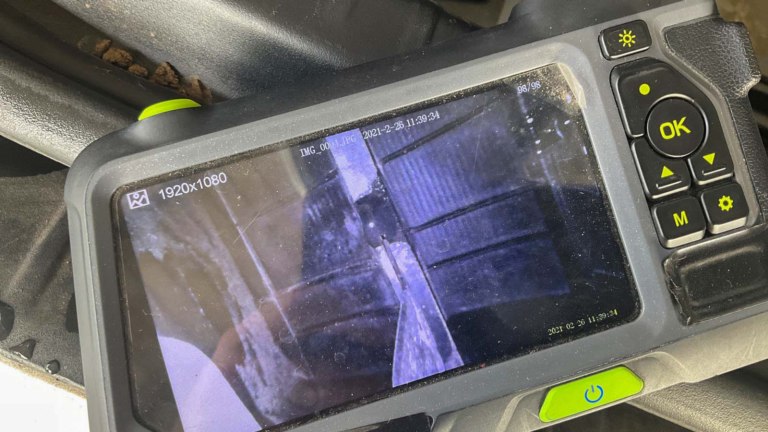
An endoscope has a long, thin flexible tube with a camera and light source on one end, and a screen on the other, allowing us to see into hard-to-reach places.
These cameras are an essential part of leak detection, allowing us to see inside box-sections and up, under dashboards for the tell-tail traces of leaks, especially in conjunction with marker dyes.
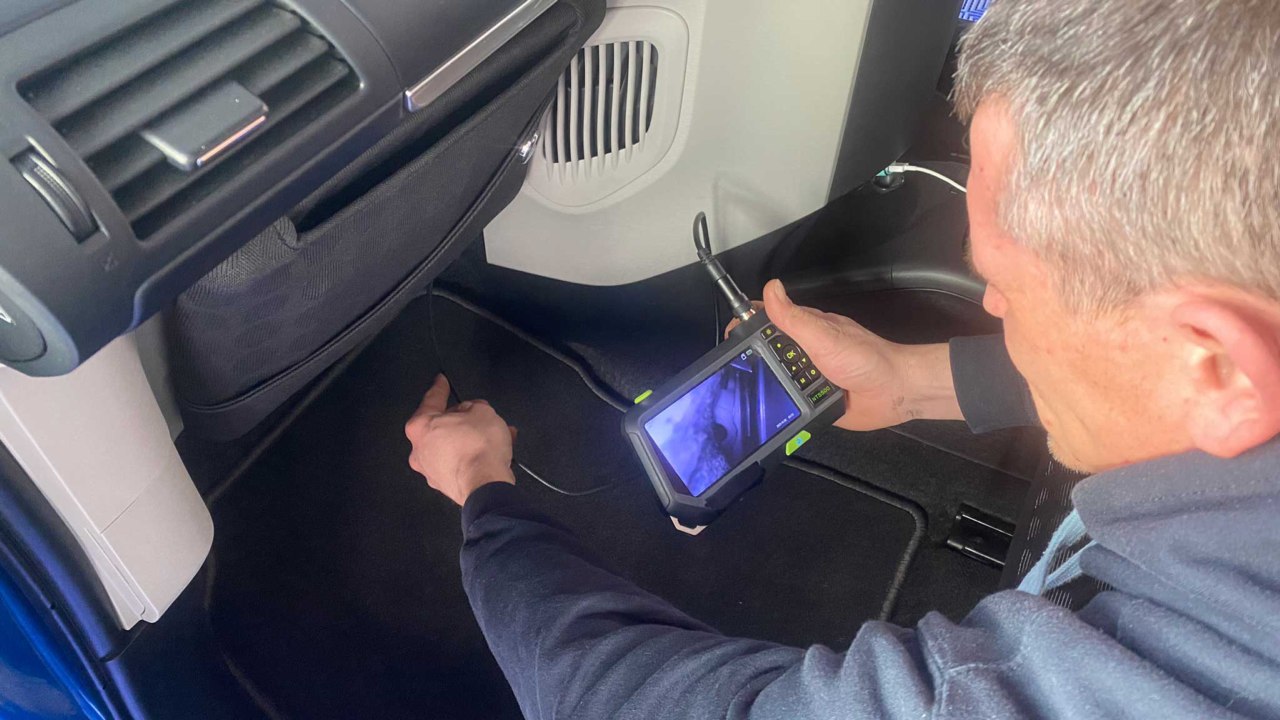
What it means
An endoscope, often called an inspection camera or borescope, is a compact camera on the end of a cable or tube that can be fed into tight spaces. The camera usually has its own light source and sends a live image to a handheld screen or tablet. In the context of car leaks and diagnostics it lets the technician look inside pillars, sills, box sections, behind door cards and under carpets without having to strip the whole interior at the first visit.
Why it matters
Half the water paths in a car run where nobody can see them. Box sections, pillars and the space behind membranes hide water tracks, rust, staining and trapped moisture, and an endoscope is the only way to look at any of it without taking the car apart. Paired with controlled water testing it shows where a drip begins, the route it takes and where it finally collects.
Avoiding strip-out is the practical saving. Confirming whether a seam, vent or drain is involved no longer means removing large areas of trim on the chance that it is, which shortens the job and reduces what has to be disturbed and resealed afterwards. Stills and video from the camera then do a second job entirely, giving a customer or an insurer something to look at when corrosion, a blocked drain or a bodged previous repair is the finding.
Where the camera goes
Leak reports, diagnostic notes and technical descriptions record it as endoscope used to inspect inside sill, inspection camera shows water tracking down pillar behind membrane, endoscope confirms corrosion around vent housing or camera inspection of sunroof cassette and drains. Rust and structural assessments use it too, wherever sills, chassis rails and cross members need checking internally.
Context
An endoscope is one of several tools used in a structured diagnosis. It works alongside smoke testing, bubble testing, controlled water tests, lifting carpets and checking drainage pipes, membranes, rear vents and scuttle areas. The camera does not find leaks on its own - it provides visual confirmation while the technician applies water or pressure and watches how it behaves. It is especially useful on modern cars with complex structures, where water can travel a long way inside cavities before finally appearing in a footwell, boot or cross member.
Common mistakes
- Assuming the camera has "proved" a leak without combining what it shows with proper water or pressure testing and an understanding of drainage paths.
- Poking the camera into cavities without care, risking damage to delicate membranes, wiring looms or painted surfaces.
- Looking only in the first area that gets wet and not using the camera further upstream to find the original entry point.
- Failing to record or save images from the inspection, making it hard to explain findings to the customer or to compare before and after repairs.