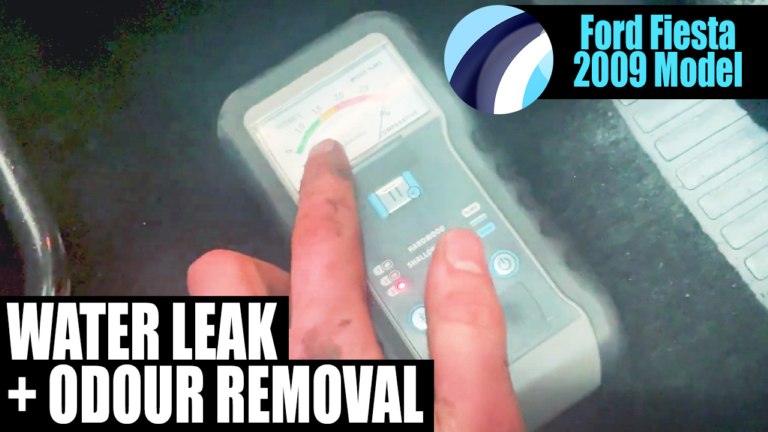
This Fiesta came in leaking from two separate sources. While it was with us, the customer decided to go further: polish, ceramic coating, wheel treatment. The result looks better than new.
Most of the clips in this video were sent directly to the customer as the job progressed. That is how we work on every water leak job: video clips at each stage showing what we found, what we are going to do, and what the options are: so the customer stays in control throughout and there are no surprises when they collect the car. It suits everybody, and it builds a level of trust that a phone call or an email estimate alone cannot.
What we found
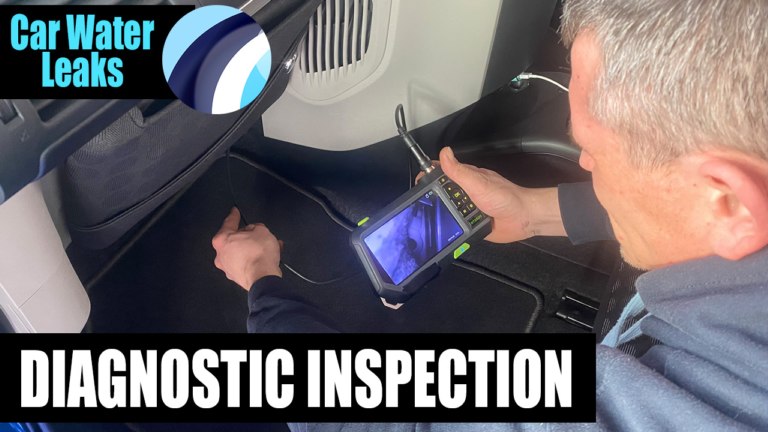
The leaks on this 2010 Ford Fiesta came from two sources, both common on cars of this age. The rear air vents had perished: a straightforward replacement job. The car also had cracked spot-welded seams along the boot area; the factory sealant that keeps these watertight hardens and cracks over time, and water finds its way in through the gaps. The weld itself is sound (there is nothing structural to worry about) we simply reseal the seam neatly. We use a flexi camera to show the customer exactly where the water is entering, which you can see in the clips. Somebody had attempted a repair around the strut previously; when we do it we keep it considerably neater.
The estimate, and what the customer chose
James walked the customer through their options on video, including that month's special offer: a free upgrade on any ceramic coating package. The options ran from a 12-18 month superhydrophobic coating up to Matrix Black, an eight-year product, with a full paint correction and cosmetic touch-in included at the higher tier. The customer chose a three-year ceramic coating with a two-stage machine polish, clay bar and exterior detail, and had the wheels treated with Innox to stop brake dust bonding to the alloys.
Why ceramic coating makes sense on a 12-year-old car
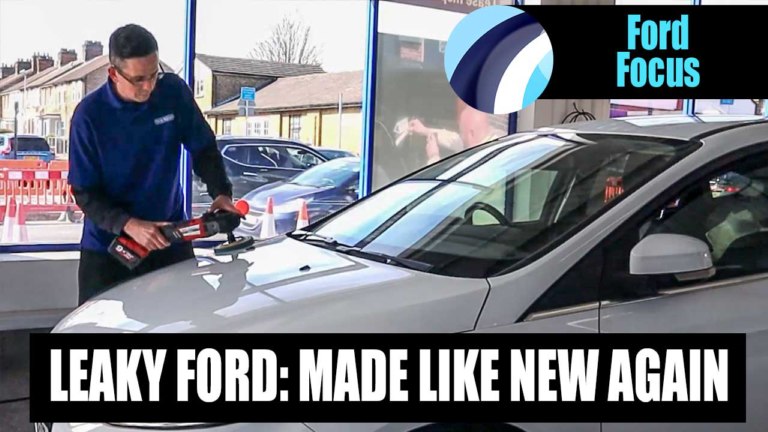
A modern car restoration on an older vehicle works on the same logic as the Ford Focus we did: the car had already taken the steepest part of its depreciation, the engine had plenty of miles left, and once the leaks were fixed it was effectively good for another ten years. A ceramic coating is considerably cheaper than a new car, and it keeps the paintwork in that condition for years without the upkeep that wax requires.
One thing worth knowing: you should not machine polish a car that has a ceramic coating on it unless you intend to re-apply the coating afterwards. Polishes contain fine abrasives that will eventually wear through the coating: slowly, but they will. The right sequence is always polish first, coat after. If a coated car picks up scratches further down the line, bring it back to a professional rather than reaching for an off-the-shelf polish; a coarse compound to remove the scratch, and a fresh coat on top, is the correct fix.
This Fiesta left us looking like a car you would not believe was twelve years old. The bonnet reflection test at the end of the video says it better than we can.



Share this video