

Mar
21
2025
A leaking windscreen after replacement usually means a poor seal. Here is what to check, and when to push the fitter to redo the job.
It usually starts with a damp patch on the carpet or a musty smell you cannot quite place. Then, after a downpour, the footwell is wet. If you have had a windscreen replaced in the last year or two, the timing is not a coincidence. A poorly fitted replacement screen is one of the most consistent causes of new water leaks we see in the workshop -- and the good news is that it is usually straightforward to resolve once the cause is confirmed.
Why replacement screens leak
Modern windscreens are not fitted into a rubber seal the way older cars were. They are bonded directly to the body aperture with polyurethane adhesive, which forms both a watertight and structural joint. When a screen is replaced -- whether through insurance or privately -- that factory bond has to be broken and a new one formed from scratch.
If the fitter does not apply primer correctly, does not press the screen fully into the adhesive, or works on a contaminated or corroded aperture, the seal will have weak points. These often hold initially but open up as the body flexes at speed or the adhesive ages. The result is a leak that appears days, weeks or even months after the replacement -- not necessarily during the first rain after the job.
For a full explanation of why windscreen bonding fails and what the four main causes are, see our glossary entry on windscreen leaks.
Do not go straight to the dealer
The instinct when a car starts leaking is to take it back to the main dealer. The problem is that dealers are not specialists in water leak diagnosis -- they are set up to replace components, not trace ingress routes. We have seen cars come through after a dealer visit where looms and control units were replaced because they had water damage, but the source of the leak was never identified. The electrical problems were fixed; the leak was not. The bills were significant.
If you go back to the screen fitting company before you have an independent diagnosis, you are also relying on them to assess their own work. That is not always reliable. An independent report gives you a clear picture of what is happening and, if the fitting is at fault, the evidence to support it.
Get an independent diagnosis first
The right first step is an independent leak investigation. At New Again we carry out a 28-point diagnostic check: we test the car methodically, identify the actual source of the ingress, and produce a clear video report showing what we found and where.
If the screen is confirmed as the cause, that report gives you something concrete to take back to the fitting company or the insurer who arranged the job. In our experience, reputable screen companies will arrange to have the screen refitted correctly and cover the cost of any drying and decontamination required -- provided the cause is clearly documented. They would rather put it right than dispute a properly evidenced report.
If the investigation shows the leak is not from the screen -- and that does happen; the scuttle, sunroof drains and rear vents can all produce water in the front footwells -- you are still in a better position than if you had started replacing things without a diagnosis. You know what it actually is, and you can address it directly.
Do not underestimate the water damage
A wet footwell feels like a minor inconvenience. It rarely is. The foam underlay under a car carpet holds a large amount of water -- far more than evaporates naturally with the windows open. If the car has been leaking for more than a few weeks, the underlay will be saturated, and that water sits against the floor metal. Rust starts quickly on interior metal because it has no protective coating.
Up to a third of the cost of a modern car is electronics -- processors, sensors, control units -- and much of that wiring runs under the carpets. A persistent leak that has not been addressed properly is one of the more reliable ways to cause electrical faults that are expensive to trace and fix.
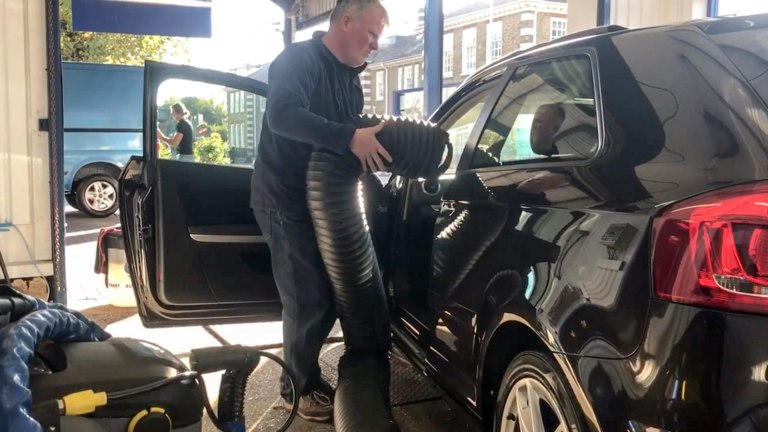
If the car needs drying after the repair, it needs to be done properly: professional drying equipment, not a day with the heaters on. A shampoo and valet will not shift saturated underlay.

Danny Argent -- writer and training officer at New Again.
Over 24 years in the industry, 250+ articles, featured in publications such as Fleet News and Fast Car.
Related Blogs
Here are some more of our latest #car-water-leak blogs
Your Car Has Been Quietly Cooking All Summer. You Won't Know What It Cost You Until It Rains.
Aug
17
2026
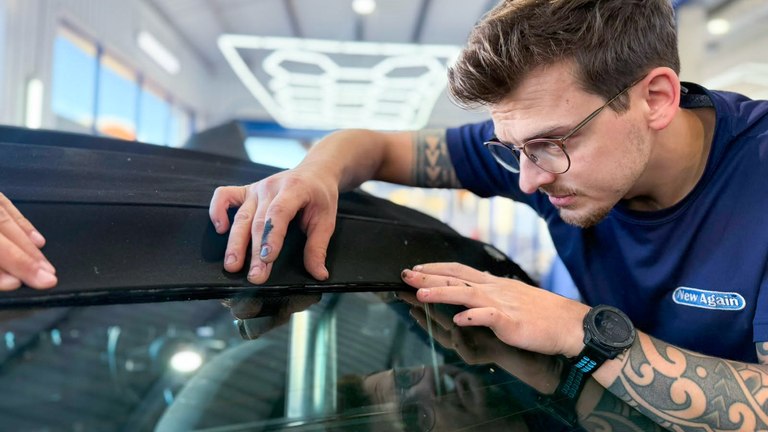
2026's heatwave has been unsticking convertible rear windows from their hoods. We normally get asked to rebond a couple a year, but this summer we've done a couple of dozen. Here's what else the heat may have loosened, and what to check before the rain ...
Read ArticleCar Water Leak: Why the Source Is Never Where the Damage Appears
Jul
03
2026
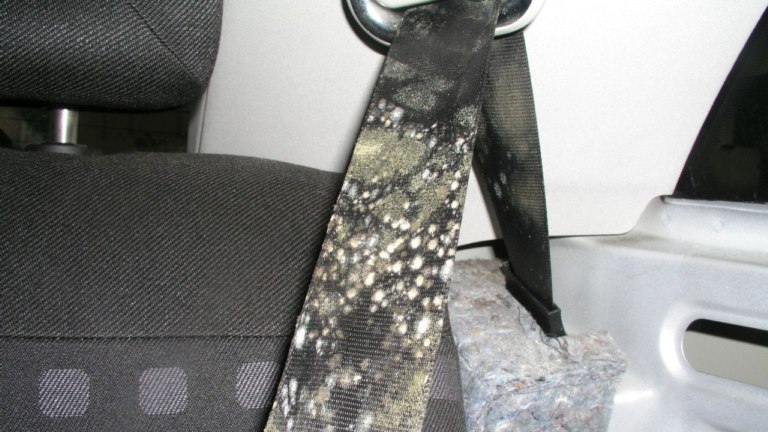
Water travels before it pools, so the source is rarely where the damage appears. Here's why leak diagnosis takes time to get right.
Read ArticleWhy your car windows are steamed up in the morning & how to fix it
Nov
21
2025
Steamed-up windows every morning usually means damp inside the cabin. The fix is simpler than you think -- here's what causes it and how to stop it.
Read ArticleBusting the Myths: Why White Vinegar, and Baking Soda Don’t Really Fix Car Odours

Jun
11
2025
White vinegar and baking soda mask car odours temporarily -- they don't remove them. Here's what actually works, from 38 years of workshop experience.
Read ArticleRX 400h Electrical Gremlins? It Might Just Be a Hidden Water Leak
Apr
29
2025
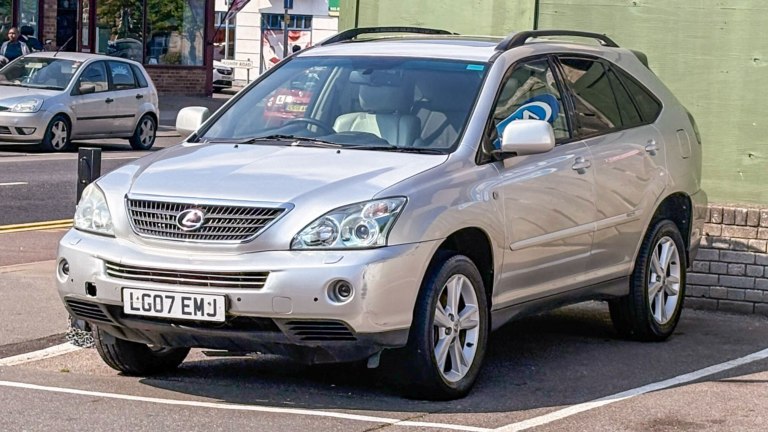
Electrical gremlins on an RX 400h often trace back to a water leak, not a wiring fault. Here's what we look for and where water gets in.
Read Articlehow to get rid of mildew smell in car
Dec
10
2022
Mildew smell in a car means moisture is trapped somewhere. Here's how to find the source, kill the spores, and stop it coming back.
Read ArticleHow to Manage a Leaky Car | Complete Guide
Nov
28
2022
Waiting on a repair? Here's how to manage a car water leak in the meantime -- stop damp spreading and protect the interior until you get it fixed.
Read ArticleHow is water leaking into my car?
Nov
01
2021
Cars have hundreds of holes -- seals, drains, and joins all fail over time. Here are the 10 leak sources we find most often in Chelmsford.
Read ArticleWhat to do if you find water in your car
Oct
19
2020
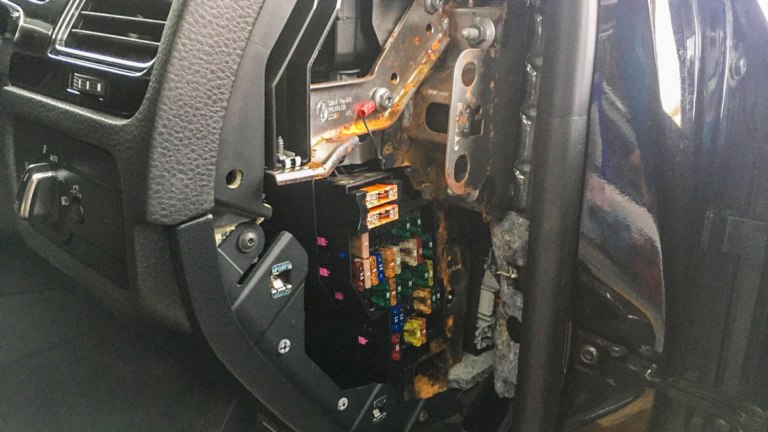
Found water in your car? We cover the common entry points -- sunroof drains, door membranes, rear lights -- and what to check first.
Read ArticleWet Carpets, Damp Footwells and Why Turning the Heating On Won't Help
Aug
23
2019
Wet carpets and damp footwells point to a water ingress problem -- not a ventilation one. Turning the heating on won't dry it out. Here's why.
Read Article
Share this blog