

Nov
01
2021
Cars have hundreds of holes -- seals, drains, and joins all fail over time. Here are the 10 leak sources we find most often in Chelmsford.
Cars have hundreds of holes in them; and in years of tracing leaks here in our Chelmsford workshop, we keep seeing the same ten culprits come up again and again. This is not a theoretical list: it is what we find on the ramp, week after week.
1. The Rear Air Vents
Almost all cars have rear air vents. They exist so that when you have the heater or air conditioning on, the air being forced into the cabin can escape out of the back. They are supposed to act like a one-way valve: letting air out but not letting anything in. Hidden behind the rear bumper and deep inside the wheel arch trim, they are one of the first places we check. When the silicone seals start to perish, water gets around them. The hinges also wear, or they clog with dirt and stop closing properly.
When you are driving in the rain, road spray drenches that whole area. The water seeps in and pools in the boot floor. If your spare wheel compartment is full of water, rear air vents are a strong first suspect.
What we recommend: replace them outright. Once these seals start to perish, patching with fresh silicone is a short-term fix at best; if the outer seal is gone, the one-way gate is usually not far behind. Because all the parts on your car are the same age, if one side is failing the other side will follow shortly. Replace both at the same time.
2. Door Membranes
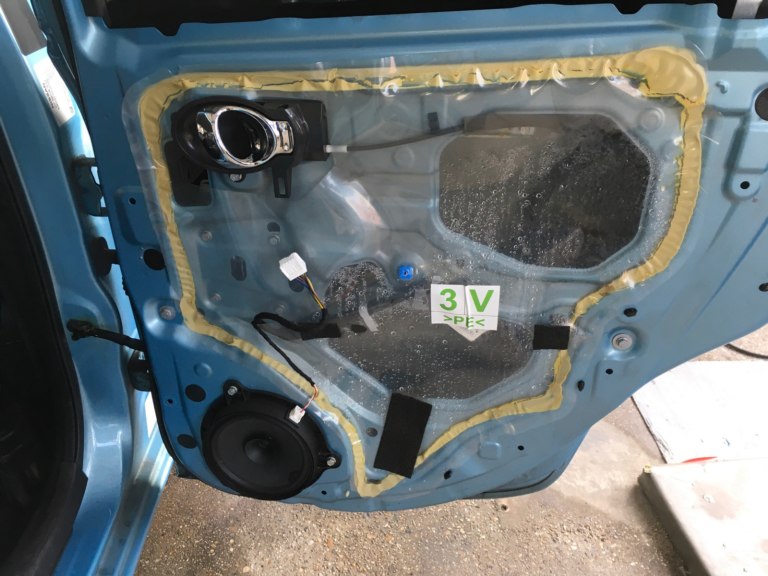
Behind the door card -- the panel carrying your door handle and window switches -- is a door membrane. On most cars it is nothing more than a sheet of polythene held in place with a sticky sealant. The door itself is not waterproof; water gets inside it and is supposed to drain out through holes at the bottom. The membrane's job is to stop any water that splashes around inside the door from reaching the door card and running into the cabin.
Depending on how much heat and sun the car gets, the polythene shrinks and the sealant dries out after around six years. It peels away from the door and opens a direct path for water into the car.
We see something else with membranes regularly: electricians and some mechanics do not always understand what they are there for. If you have had aftermarket speakers fitted or anyone has been inside the door to work on the electric windows, there is a real chance they cut straight through the membrane to gain access and never replaced it properly. It is a surprisingly common find.
What we recommend: replace with a new kit. Dealer kits come complete with the correct sealant. Making your own is possible but by the time you buy polythene and sealant for a single car, the saving is marginal. As with the rear vents: if one has perished, replace them all.
3. Windscreen
If wet carpets appeared shortly after a windscreen replacement, the most likely cause is an incorrectly fitted screen: not enough sealant, the screen not sitting squarely, or the sealant failing to key properly to the glass. The dark painted band around the windscreen aperture is there specifically to give the sealant something to bond to -- skip it or rush it and you get a leak.
We have also come across cars leaking around a screen that had never been replaced: some models left the factory with bonding that was not up to standard. If your car is relatively young and has a wet A-pillar or wet front footwells with no history of screen work, search the forums for your make and model to see if others have reported the same thing.
What we recommend: if you had a replacement screen, go back to the company that fitted it and ask them to check it under a water test. If the screen is original and the car is still within any warranty period, go to the dealer with evidence from the forums.
4. Front Scuttle
The scuttle is the trough beneath the plastic grille between your windscreen and bonnet -- the area where leaves collect in autumn. It houses wiper gearing and routes water away from the base of the windscreen. The drainage holes in the scuttle floor can block completely with compacted leaf debris, at which point the trough fills up and water backs up into the cabin through any gap in the bulkhead it can find.
What we recommend: clear the scuttle at least once a year, more often if you park under trees. Check the drain holes are open and flowing freely. It takes ten minutes and prevents a job that can cost hundreds.
5. Sun Roof
A sunroof has a plastic tray around it that collects water and channels it away through two or four silicone drain tubes running down the door pillars to the wheel arches. We see two failure modes repeatedly: the drain holes block with debris so the tray fills and slops over the edge when the car moves; or the silicone tubes shrink, split, pop off their connectors, or the connectors themselves become brittle and crack. The result in both cases is water appearing inside the pillars or dripping from the rear-view mirror area.
What we recommend: establish which failure mode you have first. Blow the drain tubes clear and confirm water is exiting at the bottom of the car. If water is disappearing into the tubes but not coming out, the tube has failed somewhere along its run. Replacement tube sets are available from the dealer.
6. Rear Lights
Cracked lenses do let water in, but the far more common find is a rubber seal that has aged, shrunk, and lost its compression against the bodywork. Once the seal fails, water tracks into the boot. On hatchbacks and estates, do not overlook the centre high-level brake light: on many cars you have to remove it to change the bulb, and the seal rarely goes back on with the same care it came off with.
What we recommend: replace the rubbers on both sides at the same time. If one has gone, the other is not far behind.
7. Rear Door Hinge Surround / Welded Seams
Modern cars are spot-welded rather than seam-welded, which is strong and efficient but leaves gaps between the spot welds. Manufacturers fill those gaps with a flexible sealant and paint over it. Over time, especially in areas where the bodyshell flexes slightly in corners, that sealant cracks. The hinge area at the top of the boot aperture on a hatchback is a classic location: it has to look neat, so the factory sealant application is thin, and it is one of the more stressed points on the shell.
The good news: this is not a structural problem. What we find is that a careful bead of fresh sealant pressed neatly into the crack solves it. The hard part is finding exactly which seam is the culprit.
8. Door Rubbers
The rubber seals around your doors maintain their compression for years but not indefinitely. They dry out, stay deformed after being compressed, shrink away from the channel they sit in, or crack. A seal does not need to fail completely to let water in; even a small flat section is enough, especially if the car is being driven in heavy rain and water is being forced against the seal rather than just running over it.
What we find useful before replacing anything: check that the rubbers are actually seated correctly all the way round. If a door was ever removed for repair or the seal was pulled out for any reason, there is a chance it was not refitted carefully. Rubber conditioner can restore some suppleness to a seal that is drying out but otherwise intact; if the rubber is cracked or has pulled away from its channel, replacement is the correct answer.
9. Pollen Filter Housing
The bulkhead -- the fireproof wall between the engine bay and the cabin -- has many penetrations: steering column, pedal assemblies, wiring looms. Any of them can leak. The one we find most often overlooked is the pollen filter housing for the air conditioning system. The location varies by model, but the principle is consistent: if the external seal on the housing is perished, water runs past it and into the cabin. If there is visible moisture inside the housing itself, that is a reliable indicator of a leak path nearby.
10. Aftermarket Electronics
Parking sensors, alarms, immobilisers, aftermarket audio -- the fitting work that goes with them is a regular source of leaks we are asked to trace. Automotive electricians know their trade, but we see repeatedly that they do not always consider what happens when a grommet is removed and not replaced, a wire is routed along the edge of a door seal in a way that holds the seal slightly open, a hole is drilled through a box section, or a membrane is cut and left unrepaired.
Three or four times a year we find cars where a tradesman has "solved" a wet floor by drilling a drain hole in the floor pan. Technically, water does drain out. It also comes back in every time the car moves through standing water.
What we recommend: go back to whoever did the installation and ask them specifically how they intend to fix it. Then check their proposed solution carefully before you agree to it.
Bonus: Leaks in Convertible Cars
Cabriolets share most of the same failure points as hard-top cars, but they have additional ones and are generally more prone to leaking. As well as the front scuttle, a soft-top has a second scuttle that catches water washing off the hood, plus a large trough the hood folds into. Both can block with leaves and fill with water. Hood drain tubes are often silicone and subject to the same perishing and cracking we see on sunroof drains.
Door glass on a convertible is often pressing against a rubber seal with no surrounding frame to help locate it; keeping those seals clean and conditioned is more important than on a saloon. Dirt and grit act as an abrasive every time the window moves up and down, wearing the seal surface and reducing its ability to form a good contact.
What else is worth knowing about car leaks?
Your car was not designed to be a submarine. Hundreds of holes in the body are perfectly fine in normal use because water is not supposed to reach most of them. Once a drain blocks or a seal fails, water backs up and finds the next available hole. If the car has been in an accident, a slight twist in a panel or a crack in a seam can open up a leak path that is genuinely difficult to trace because it does not correspond to any obvious weak point.
One thing worth stating clearly: cars almost always have more than one leak. The rubber, polythene and neoprene components on your car are all broadly the same age. The shrinkage that caused your rear light seal to fail is probably affecting other seals at the same time. We routinely trace a car to find three or four separate ingress points contributing to the same wet footwell.
Damp and Mould
The first sign most people notice is a damp smell. That smell is mould spores, and it is worth taking seriously. A car is a small, sealed metal box; if the spore count inside it is high enough, it can cause real health problems. A damp car is not just an inconvenience.
Electrical Problems
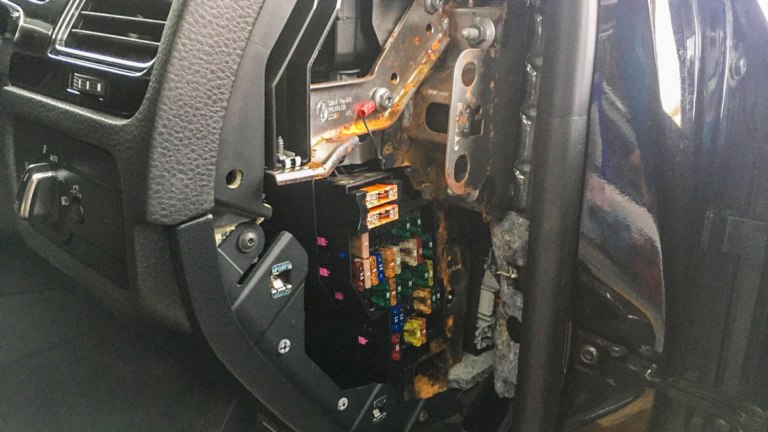
Condensation from moisture in the cabin settles on every cold hard surface, including electrical connectors. ECUs for airbags and seatbelts sit low in the car, often beneath the seats or under the carpet, and in a badly leaking car they can be partially or fully submerged. Water damage to modern car electronics is expensive. It is another reason not to leave a wet car to dry out on its own.
We know what you are thinking...
Yes, we do. You are thinking that now the leak is fixed, you park in the sun for a week, run the heater with the windows cracked, and the problem solves itself.
If you drive a pick-up truck with rubber floors, you might get away with it. A small, basic town car with minimal insulation might manage it too. Almost every other car, though, has carpet over a waterproof membrane, under which sits roughly half an inch of woolly sound-deadening material, and beneath that a layer of foam between one and four inches thick covering the box sections and electrical components.
What we find when we lift those carpets surprises people every single time: 10 to 15 litres of water sitting trapped in that foam and deadening, with the carpet membrane above it preventing any evaporation. The car smells fine from inside because the membrane holds the moisture down. The mould grows silently underneath it.
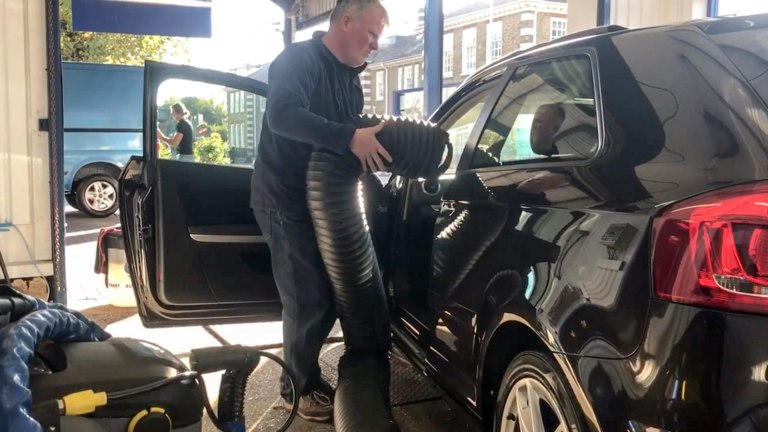
The correct fix is to lift the carpets, extract the standing water, and dry the substrate properly with professional drying equipment. You rarely need to remove carpet from the car entirely, but the front seats usually have to come out to get the carpet up. That is a subject for another article.
Related
Car Water Leaks Found Videos - See if we have found a leak in your make and model of car.
Case study: a water leak from diagnosis to dry-out. This video runs to around 33 minutes, but it shows exactly how much water can accumulate in a car and how we work through the drying and decontamination process.
If this all sounds like more than you want to take on yourself, our Water Leak Detection Service covers the full diagnosis.

Danny Argent -- writer and training officer at New Again.
Over 24 years in the industry, 250+ articles, featured in publications such as Fleet News and Fast Car.
Related Blogs
Here are some more of our latest #car-water-leak blogs
Your Car Has Been Quietly Cooking All Summer. You Won't Know What It Cost You Until It Rains.
Aug
17
2026
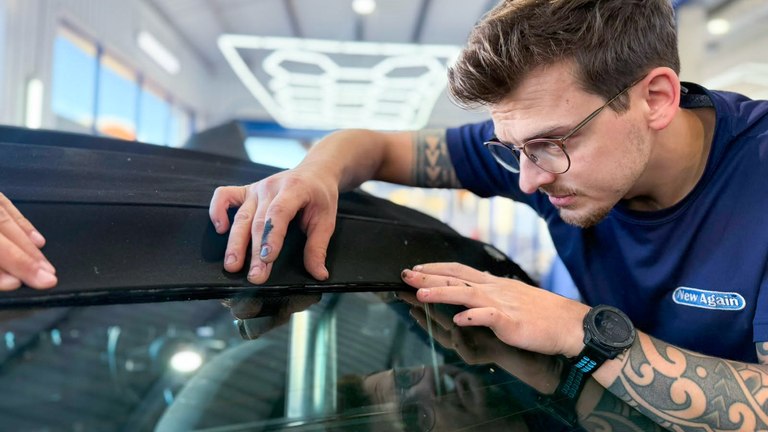
2026's heatwave has been unsticking convertible rear windows from their hoods. We normally get asked to rebond a couple a year, but this summer we've done a couple of dozen. Here's what else the heat may have loosened, and what to check before the rain ...
Read ArticleCar Water Leak: Why the Source Is Never Where the Damage Appears
Jul
03
2026
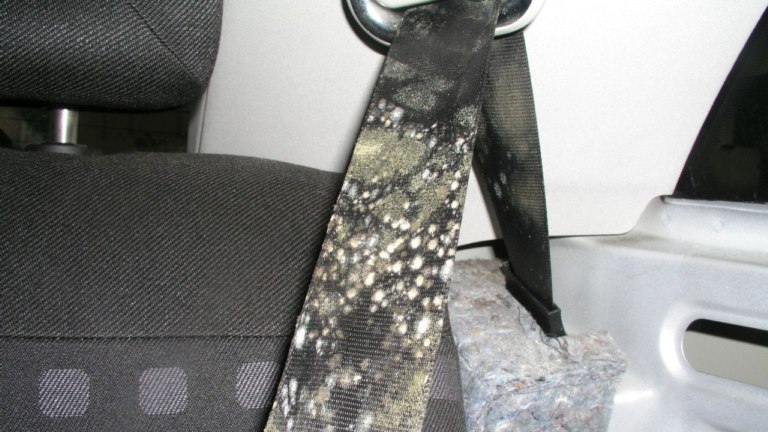
Water travels before it pools, so the source is rarely where the damage appears. Here's why leak diagnosis takes time to get right.
Read ArticleWhy your car windows are steamed up in the morning & how to fix it
Nov
21
2025
Steamed-up windows every morning usually means damp inside the cabin. The fix is simpler than you think -- here's what causes it and how to stop it.
Read ArticleBusting the Myths: Why White Vinegar, and Baking Soda Don’t Really Fix Car Odours

Jun
11
2025
White vinegar and baking soda mask car odours temporarily -- they don't remove them. Here's what actually works, from 38 years of workshop experience.
Read ArticleRX 400h Electrical Gremlins? It Might Just Be a Hidden Water Leak
Apr
29
2025
Electrical gremlins on an RX 400h often trace back to a water leak, not a wiring fault. Here's what we look for and where water gets in.
Read ArticleMy replacement windscreen is leaking -- what should you do next?
Mar
21
2025
A leaking windscreen after replacement usually means a poor seal. Here is what to check, and when to push the fitter to redo the job.
Read Articlehow to get rid of mildew smell in car
Dec
10
2022
Mildew smell in a car means moisture is trapped somewhere. Here's how to find the source, kill the spores, and stop it coming back.
Read ArticleHow to Manage a Leaky Car | Complete Guide
Nov
28
2022
Waiting on a repair? Here's how to manage a car water leak in the meantime -- stop damp spreading and protect the interior until you get it fixed.
Read ArticleWhat to do if you find water in your car
Oct
19
2020
Found water in your car? We cover the common entry points -- sunroof drains, door membranes, rear lights -- and what to check first.
Read ArticleWet Carpets, Damp Footwells and Why Turning the Heating On Won't Help
Aug
23
2019
Wet carpets and damp footwells point to a water ingress problem -- not a ventilation one. Turning the heating on won't dry it out. Here's why.
Read Article
Share this blog